

By Maria Richmond
Owner / Ransford Historian
You’ve spotted something alarming—maybe it’s a pile of sawdust-like debris near your baseboards, or tiny wings scattered on a windowsill. Something is clearly going on inside your walls, and you need to know: is it carpenter ants or termites?
It’s one of the most common questions we get from our customers, and getting the answer right matters. While both pests can damage the wood structure of your home, they behave very differently—and the treatment approaches (and long-term costs) are completely different too.
Here’s how to figure out exactly what you’re dealing with, what kind of damage you’re looking at, and what to do next.
The Quick Answer: Carpenter Ants Don’t Eat Wood. Termites Do.
This is the single biggest difference, and it explains almost everything else.
Carpenter ants excavate wood to build their nests. They chew through it and push the debris out, leaving behind smooth, clean galleries. But they don’t actually eat the wood—they feed on other things like insects, honeydew from aphids, and food scraps in your kitchen. They are most drawn to water-damaged wood, like from an ice dam.
Subterranean Termites eat the wood itself. It’s their primary food source. They consume cellulose (the main component of wood) and can devour structural timbers from the inside out, often without leaving any visible evidence on the surface until the damage is severe.
This is why termites are generally considered more destructive over time—they’re literally eating your house, not just using part of it as a living space. Carpenter ants cause real structural damage too, but they work more slowly, and leave clearer signs that something is wrong.
How to Tell Them Apart: What to Look For
If you’re seeing winged insects or suspicious damage around your home, here are the key differences to check:
Look at the Insects Themselves
Carpenter ants are large (typically ¼ to ½ inch), dark brown or black, with a clearly pinched waist and elbowed (bent) antennae. If you see winged ones, their front wings are noticeably longer than the back wings.
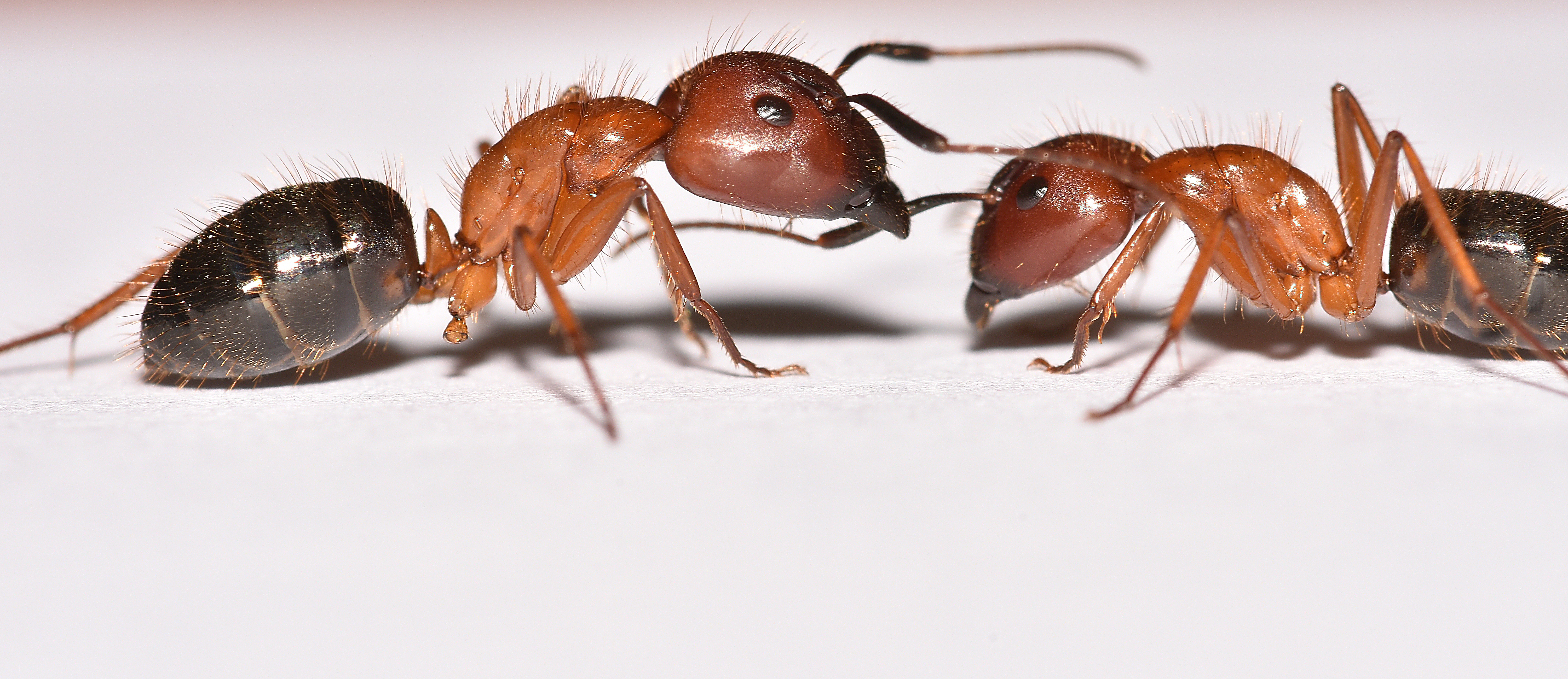
Carpenter ants are large, dark-bodied insects with a clearly pinched waist and elbowed antennae.
Termites are smaller, pale or translucent white (workers) to dark brown (swarmers), with a thick, straight waist—no pinch. Their antennae are straight and bead-like. Winged termites have four wings that are all the same length.
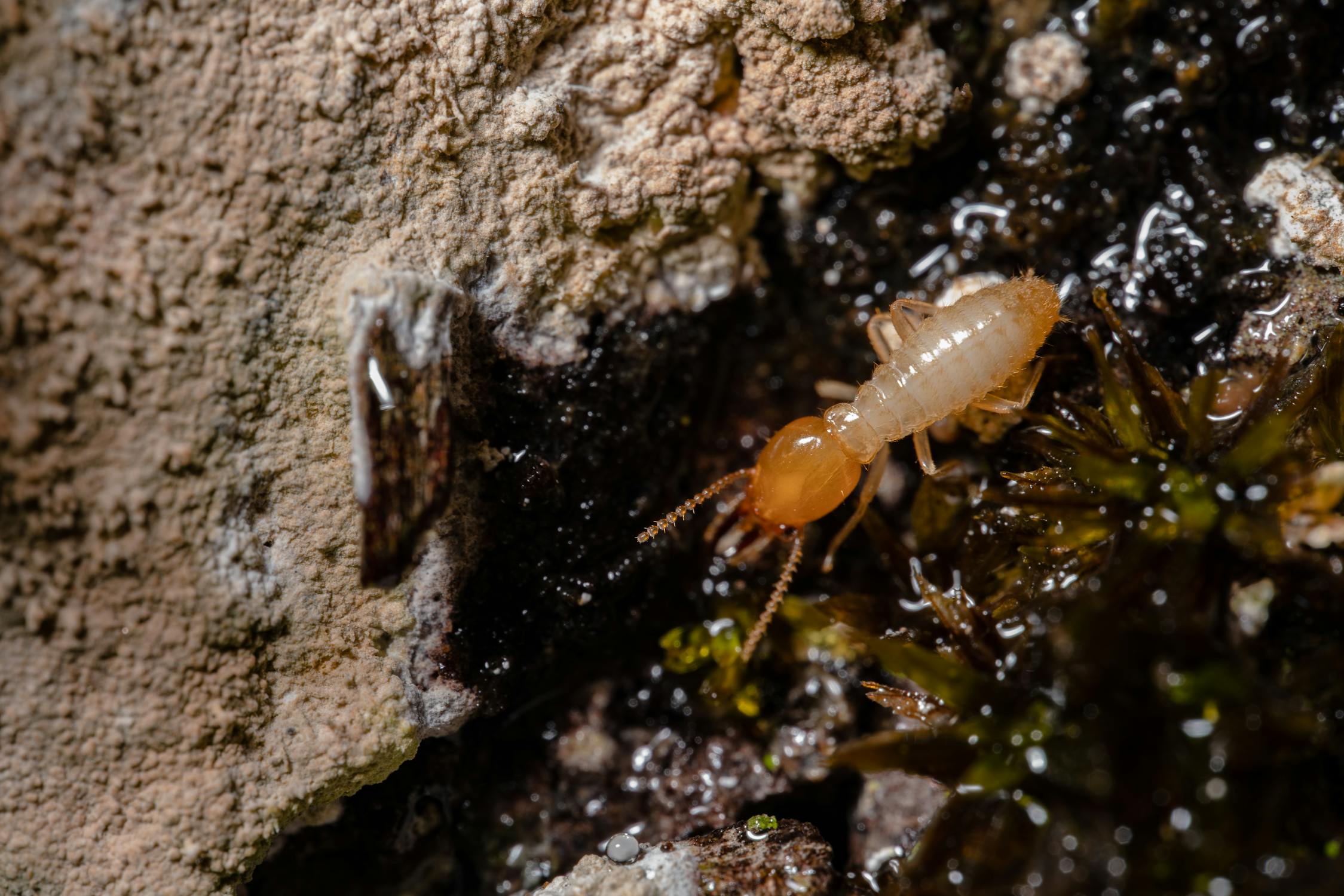
Termites are smaller and paler, with a straight waist and bead-like antennae — very different from carpenter ants.
Check the Debris
Carpenter ants leave behind “frass”—small piles of wood shavings that look like fine sawdust, often mixed with insect body parts. You’ll typically find this near baseboards, window frames, or wherever they’re nesting.
Termites can leave behind mud tubes (pencil-thin to ~1/2" wide tunnels made of soil and wood) along foundation walls. Subterranean termites build these distinctive tunnels to travel while staying moist and protected. Unlike ants, they have a thinner exoskeleton, so exposure to dry air for too long can cause them to dry out and die.
Examine the Damage
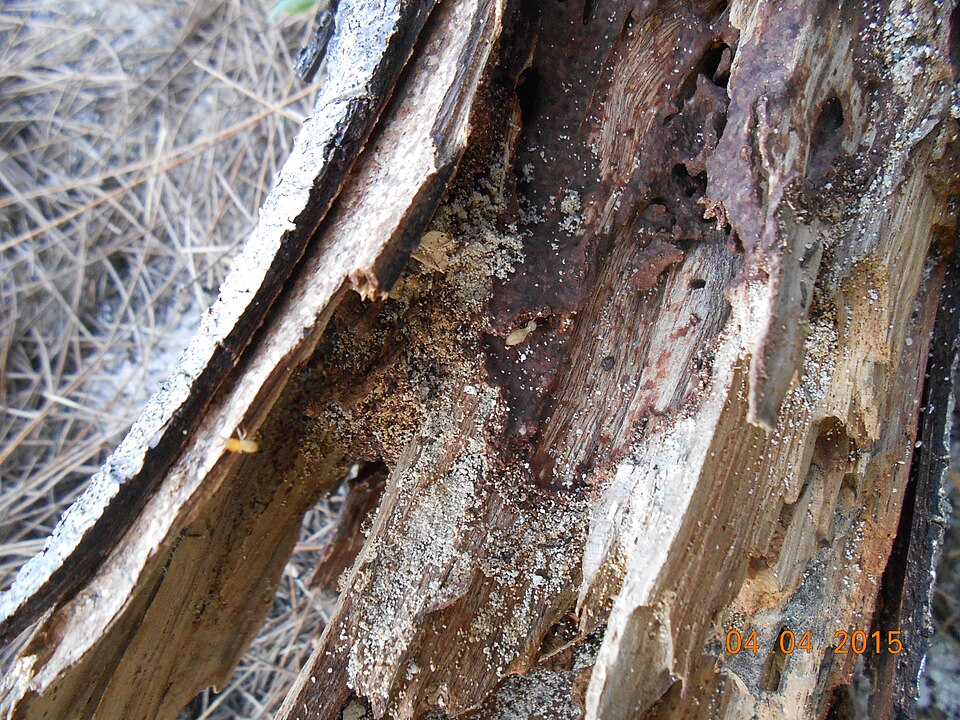
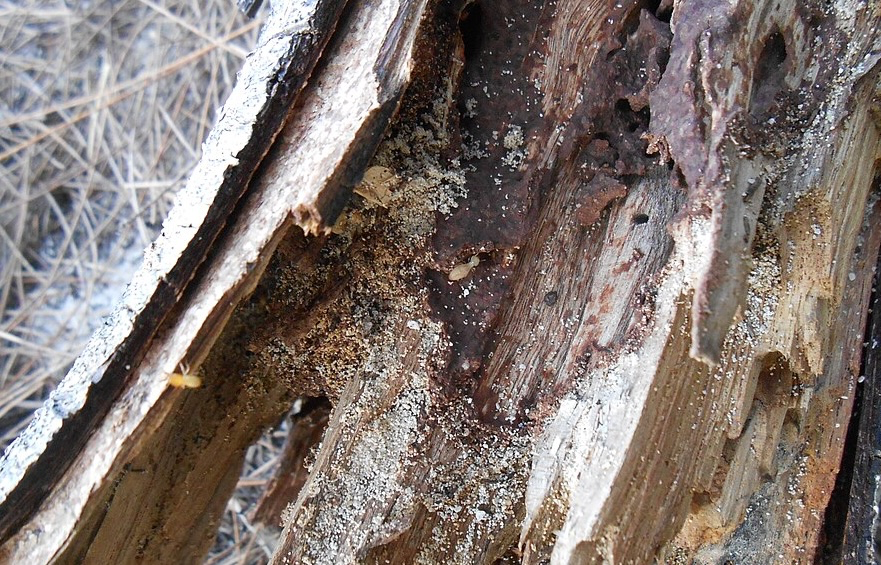
Termite damage creates rough, ragged tunnels in wood — unlike the smooth galleries left by carpenter ants.
Carpenter ant galleries are smooth, clean, and almost sandpapered-looking inside. If you can see into the damaged wood, it’ll look neat and organized.
Termite damage is rough, ragged, and often packed with mud or soil. The wood may look layered or have a honeycomb-like pattern when broken open as they tend to eat along the wood grain.
Pro tip: Tap on wood you suspect is damaged. If it sounds hollow, that’s a sign something has been tunneling through it—whether ants or termites.
Why This Matters More in Massachusetts Than You’d Think
Here’s something many homeowners don’t realize: Massachusetts is prime territory for both of these pests.
Carpenter ants thrive in our climate. They love damp, decaying wood—and between our wet springs, humid summers, and housing stock with older wood framing (50–100+ years old), conditions here are ideal. Carpenter ants are the #1 wood-destroying insect in New England.
Subterranean termites are very present in Massachusetts, though many homeowners assume they’re only a problem in warmer southern states. That’s not the case. Because they are less visible than ants, they are live underground or in hidden areas like crawl spaces and foundation walls, which makes early detection difficult. By the time visible signs appear—such as mud tubes, damaged wood, or soft spots—the infestation may already be well established.
When Should You Call a Professional?
Honestly? As soon as you suspect something. Here’s why:
- Misidentification is common. Carpenter ant swarmers and termite swarmers look similar to the untrained eye, and the wrong treatment wastes time and money.
- DIY treatments rarely solve the problem. Spraying the ants you can see doesn’t address the colony hidden in your walls. Termites are even harder to reach without professional treatments as their colony can be 3ft+ underground.
- If you’re seeing signs of carpenter ants or termites, the infestation may already be well established. A professional can uncover what’s happening behind the scenes to resolve the issue and keep your home protected.
5 Things You Can Do Right Now
While you’re waiting for a professional inspection, here are steps you can take today:
- Reduce moisture. Fix leaky pipes, clean gutters, and make sure your basement or crawl space has adequate ventilation. Both carpenter ants and termites are drawn to damp wood.
- Move firewood away from your home. Keep woodpiles at least 20 feet from your foundation and elevated off the ground.
- Trim branches touching your house. Carpenter ants use tree limbs as highways to access your roof and upper floors.
- Check your foundation. Look for mud tubes (termites) or frass piles (carpenter ants) along the base of your home, especially on the north and east-facing sides where moisture tends to collect.
- Document what you find. Take photos of any insects, damage, or debris you spot. This helps your pest control technician make a faster, more accurate diagnosis.
Not Sure What You’re Dealing With? We’ll Find Out for You.
Whether it’s carpenter ants, termites, or something else entirely, our team has been identifying and treating wood-destroying insects in Massachusetts homes for over 130 years. We offer free quotes over the phone so you can get a clear answer—and a plan—without any commitment.